
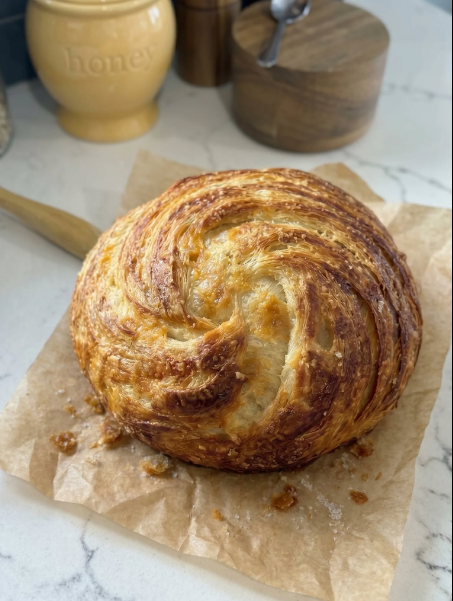
Okay, let’s get one thing straight—this is not a traditional croissant. No endless folding sessions. No butter blocks fighting for their lives on your counter. No laminated dough meltdown moments.
But somehow? This loaf still pulls off that flaky, golden, buttery bakery vibe like it’s showing off.
The secret is stupid simple:
cold grated butter folded directly into the dough.
That’s it.
And once this thing bakes up? Crispy crackled crust on the outside, soft rich layers inside, and that buttery aroma that makes your kitchen smell illegally good.
Why This Loaf Goes Absolutely Crazy
Golden Crackle Energy
The crust bakes up crispy, flaky, and lightly layered—basically giving croissant attitude without the extra work.
Buttery Interior Without Feeling Heavy
Inside stays soft, rich, and tender for days instead of drying out overnight like some sourdough loaves do.
No Fancy Pastry Skills Needed
You get that elevated bakery-style texture without spending 14 hours laminating butter like a sleep-deprived French pastry chef.
What You’ll Need
- 100g active sourdough starter
- 350g water (adjust depending on butter amount)
- 500g bread flour
- 10g salt
- Cold butter, grated
Butter Levels (Choose Your Difficulty)
Beginner-Friendly
- 75g butter
- 350g water
Intermediate
- 100g butter
- 360g water
Full Chaos Mode (Advanced)
- 115g butter
- 370g water
More butter = richer loaf + trickier dough handling.
Choose wisely.
How To Make It
1. Mix + Rest
Combine starter + water first.
Add flour + salt and mix until shaggy and rough-looking.
Cover and let it rest for about 1 hour.
This relaxes the dough and starts gluten development without extra effort.
2. Build Strength
Do your first round of stretch and folds—about 20–25 total folds until the dough tightens into a smoother ball.
Rest 30 minutes.
3. Add the Butter (Main Character Moment)
During stretch-and-fold rounds:
- Add half the grated butter during the 2nd fold
- Add the rest during the 3rd fold
Keep everything cold.
Seriously. Cold dough = flaky payoff.
Warm dough = greasy sadness.
Do 4 total stretch-and-fold rounds spaced 15–30 minutes apart.
4. Bulk Fermentation
Let the dough rise until roughly 70–75% bigger.
Not doubled.
Don’t overdo it.
If your kitchen runs warm, toss the dough in the fridge for a bit to keep the butter from melting into oblivion.
5. Shape the Dough
Shape into:
- a batard
- round boule
or even a loaf pan if you want softer sandwich-style slices.
Place seam-side up in a floured banneton.
6. Cold Proof = Flavor Upgrade
Refrigerate for at least 5 hours.
You can push it up to 36 hours if needed.
This step:
- deepens flavor
- firms butter back up
- helps create those flaky outer layers
Basically mandatory for the full effect.
7. Bake It Like a Bakery
Preheat oven to 450°F (230°C) with a Dutch oven inside.
Bake:
- 30 minutes covered
- then 10–15 minutes uncovered at 410°F (210°C)
Let it cool completely before slicing.
Yes, waiting matters here.
Pro Moves (Read These)
- Freeze butter before grating = cleaner incorporation
- Dough feeling greasy? Chill immediately
- Bread flour matters here for structure
- Dutch oven gives the best crust situation
- Keep the dough cool the entire process
That’s the whole game.
Flavor Upgrades Once You Nail the Base
Ham + Cheese
Savory bakery café vibes.
Chocolate Chunk
Turns into a breakfast-dessert hybrid situation.
Cinnamon Raisin
Soft, sweet, buttery, and unreal toasted.
FAQ
Is this actual croissant dough?
Not technically. But it absolutely borrows that flaky buttery energy.
Why did my dough get oily?
Butter got too warm. Chill everything next time.
Can I use all-purpose flour?
You can, but bread flour gives way better structure and layering.
How long does it stay soft?
About 3–4 days thanks to the butter.
The Bottom Line
This loaf sits somewhere between artisan sourdough and buttery pastry magic. It’s rich without being heavy, flaky without complicated lamination, and honestly feels way fancier than the effort required.
One bake in, and plain sourdough starts feeling a little underdressed.